
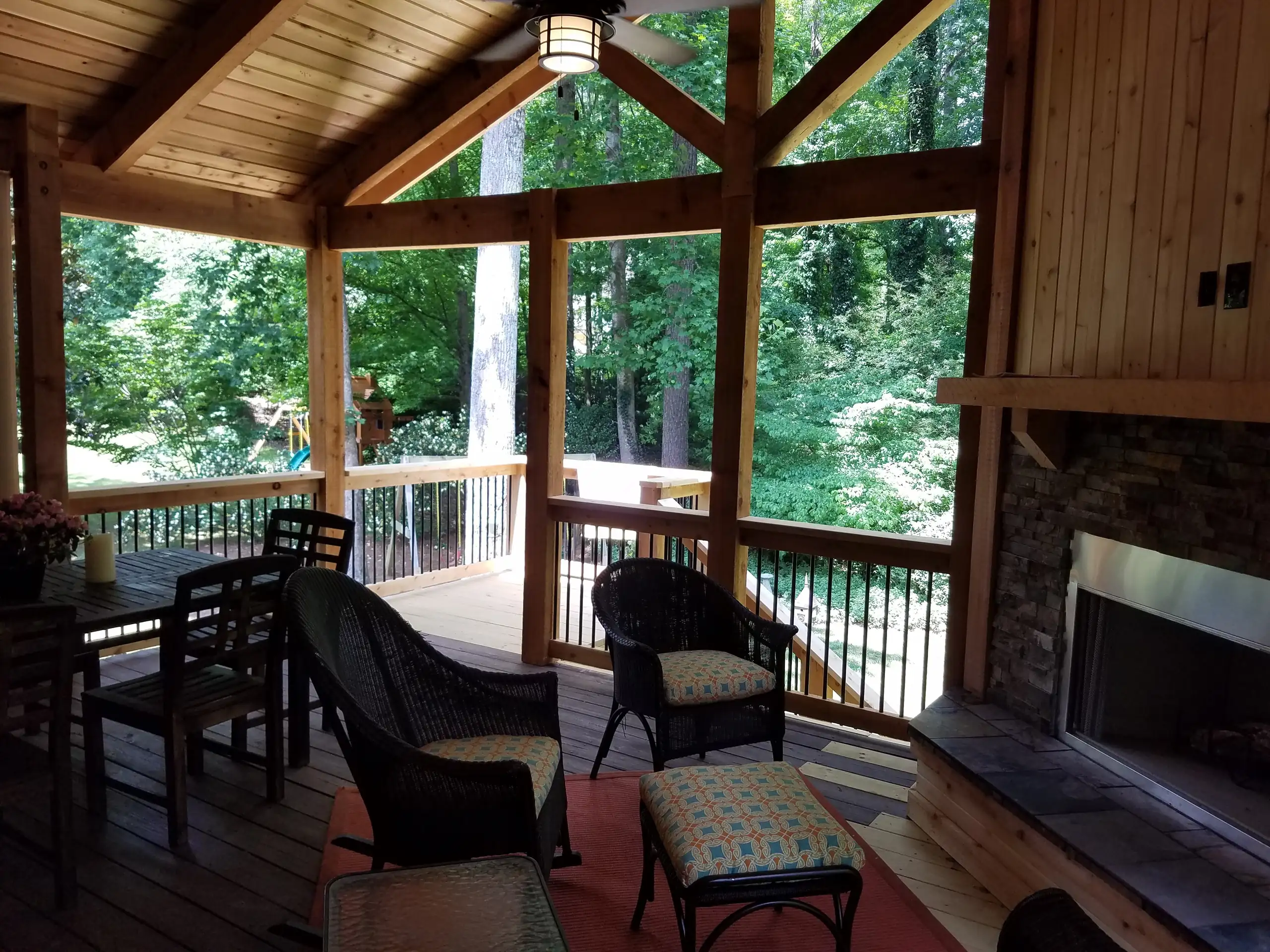
A screened porch is usually the better fit if you want shade, airflow, and an outdoor feel with fewer insects. A sunroom makes more sense when you want greater protection from weather, pollen, and temperature changes. How much extra comfort a sunroom provides depends on whether it is designed as a three-season or four-season space.
For homeowners in North Atlanta, the sunroom vs screened porch decision is not just about appearance. Long stretches of warm, humid weather, regular 90°F+ summer days, and heavy pollen seasons all affect how often the space will feel comfortable.
A screened porch creates an outdoor room with shade, airflow, and insect protection, but it does not seal out heat, humidity, pollen, or mold allergens. A sunroom addition can provide more separation from those conditions, but only if the glazing, insulation, ventilation, orientation, air sealing, and heating or cooling plan support the way you want to use it.
The best choice comes from matching the room to your daily routine. Before choosing a screened porch or sunroom, consider when you will use it, the level of comfort you expect, and how much separation you want from outdoor conditions.
Which Option Fits How You Use Your Porch?

A screened porch fits homeowners who want an outdoor room with better shade and fewer insects, while a sunroom fits homeowners who want more control over weather, allergens, and temperature. The pros and cons of a sunroom vs. a screened porch become clearer when you compare how each space feels during North Georgia’s heat, humidity, pollen season, and cooler months.
- Outdoor Connection: A screened porch keeps outdoor sounds, breezes, and yard views close at hand, making it a natural setting for casual meals and quiet evenings. Choose a screened porch when airflow and an open-air feel matter more than maintaining indoor-style temperatures.
- Heat and Humidity: A screened porch depends on shade, ceiling fans, roof design, and natural airflow to stay comfortable during long warm stretches. A sunroom can still overheat on 90°F+ days if the glass, ventilation, shading, and cooling strategy are not planned correctly.
- Pollen and Allergens: Screens help with insects and some debris, but they do not block airborne tree, grass, weed, and mold allergens the way an enclosed room can. If spring pollen is a major concern, a properly enclosed sunroom or four-season sunroom gives you more control than a screened porch in North Atlanta.
- Privacy Control: A sunroom does not automatically create more privacy because large glass areas can expose the room to the yard or neighboring homes. It does give you more privacy options through wall placement, glazing choices, shades, blinds, and other window treatments.
Homeowner Insight: A room that looks attractive on paper may go unused if its temperature, pollen exposure, or privacy does not match your family’s habits.
What Are the Real Cost and Comfort Tradeoffs?

The sunroom vs screened porch cost difference usually comes from how much enclosure, insulation, glass, electrical work, and climate planning the project requires. A screened porch generally has fewer enclosure components, while a sunroom can add glazing, air sealing, insulation, more complex wall and roof details, and possibly heating or cooling.
- Enclosure Level: A screened porch typically uses a roofed structure with framed screen panels and open airflow. A sunroom addition adds more walls, windows, doors, seals, and weather-resistant details, which usually makes the project more involved.
- Three-Season Comfort: A three-season room provides more protection than a screened porch but is not the same as a fully conditioned living space. It may work well in spring, fall, and mild winter days, but summer heat and solar gain still need careful planning.
- Four-Season Comfort: A four-season sunroom is designed with stronger insulation, air sealing, glazing, and heating or cooling so it can function more like an interior room. That added comfort usually comes with more design complexity and higher project requirements than a screened porch or basic three-season room.
- Material and Finish Choices: Flooring, framing, glass, screens, doors, lighting, fans, and deck materials all influence the final cost and long-term maintenance. Low-maintenance options such as composite decking can reduce upkeep in Georgia’s humid climate, but they still need to fit the overall budget.
Cost Consideration: A screened porch is usually simpler because it has fewer enclosed components, while a true four-season room adds building details that directly affect comfort and price.
How Should You Plan a North Atlanta Addition?

Planning should start with the existing home, the proposed location, the intended use, and the local approval process that applies to your address. A screened porch, covered porch, three-season room, or four-season sunroom can all work well when the structure is matched to the site instead of forced into a preset design.
- House Connection: The location of doors, windows, rooflines, utility lines, and the existing foundation can influence which option works well. The addition should connect to the house in a way that supports safe movement, proper drainage, natural light, and a practical transition between indoor and outdoor areas.
- Sun and Shade Exposure: A west-facing glass room can collect significant afternoon heat, while a shaded screened porch may stay more comfortable with fans and airflow. Walk the site at different times of day so you understand where direct sun, shade, and views will shape the room’s comfort.
- Permit Questions: The project location and scope determine which local authority, permit process, trade permits, and inspections apply. Requirements can differ by city and county, so the first step is confirming the jurisdiction for your address and then following the applicable residential permitting process.
- Future Plans: A screened porch is not always easy to convert into a sunroom later because the original structure may not be designed for walls, glass, insulation, air sealing, or climate control. If you may want a three-season room or four-season sunroom in the future, make that part of the early design conversation.
Also, think about how the new room will relate to the rest of your yard. A screened porch can pair well with a deck, patio, fireplace, or other outdoor living structure when the layout is planned as one connected space.
Planning Tip: Bring photos of the existing porch or proposed location, a list of how you want to use the room, and questions about heat, pollen, privacy, and maintenance to the consultation.
Sunroom Vs Screened Porch Guidance from Ace and Hammer
The right choice is not about whether a sunroom is better than a screened porch. It is about whether you want a breezy outdoor room, a more protected three-season room, or a properly insulated and climate-controlled four-season sunroom.
If you are comparing options for your home, schedule a consultation with Ace and Hammer. A project-specific conversation can help you compare comfort expectations, site conditions, local permitting, and cost drivers before you commit to a room type.
Sunroom Vs Screened Porch FAQs
Will a sunroom make my home hotter in the summer?
A sunroom can gain heat through its windows, especially when the room receives strong direct sunlight and lacks effective shading or ventilation. The design should account for orientation, glazing, shading, insulation, and any heating or cooling approach before construction begins.
Does a screened porch keep out every insect?
Screening can reduce exposure to many insects, but it does not create a completely sealed environment. Door operation, screen condition, gaps, lighting, nearby vegetation, and local insect activity can all affect how comfortable the space stays.
Can furniture stay on a screened porch year-round?
Furniture on a screened porch remains exposed to humidity, dust, pollen, temperature changes, and occasional moisture. Homeowners should choose materials and cushions that suit the level of exposure and plan for regular cleaning and protection.
What is the difference between a three-season and a four-season sunroom?
A three-season room provides enclosure and weather protection but is not designed to perform like a fully conditioned interior space. A four-season sunroom uses stronger insulation, air sealing, glazing, and heating or cooling to keep the room more comfortable year-round.
What should I bring to a sunroom or porch consultation?
Bring your preferred uses for the space, approximate furniture needs, concerns about sun or insects, and examples of layouts you like. Photos of the existing house and a list of questions about cost drivers, approvals, maintenance, and construction details can make the discussion more productive.
